The monitoring gap holding marine energy back
Tidal energy offers reliable, renewable power, but understanding its impact on marine life has been a persistent challenge. Powerful currents, biofouling, shifting sediments, and extreme pressure create conditions where most monitoring systems fail within weeks.
Without reliable, continuous data, regulators and developers face an impossible choice: accept uncertainty or stop deploying. MarineSitu was built to close that gap.
What the system delivers
Species detection and tracking
AI-assisted detection identifies and tracks fish and marine mammals in real time.
Sonar + hydrophone integration
Imaging sonar provides visibility in turbid conditions. Hydrophones monitor device health and capture marine animal sounds.
Anti-fouling systems
UV-C lights and mechanical wipers keep viewports and sensor surfaces clear.
Time-synced multi-sensor streams
All data are integrated into unified, timestamped records, ready for analysis and regulatory reporting.
Continuously improving models
Machine learning models are refined to become highly accurate using site-specific data.
Regulatory-ready outputs
Custom dashboards and automated report generation significantly cut reporting effort.
Monitoring the tough environments of tidal energy
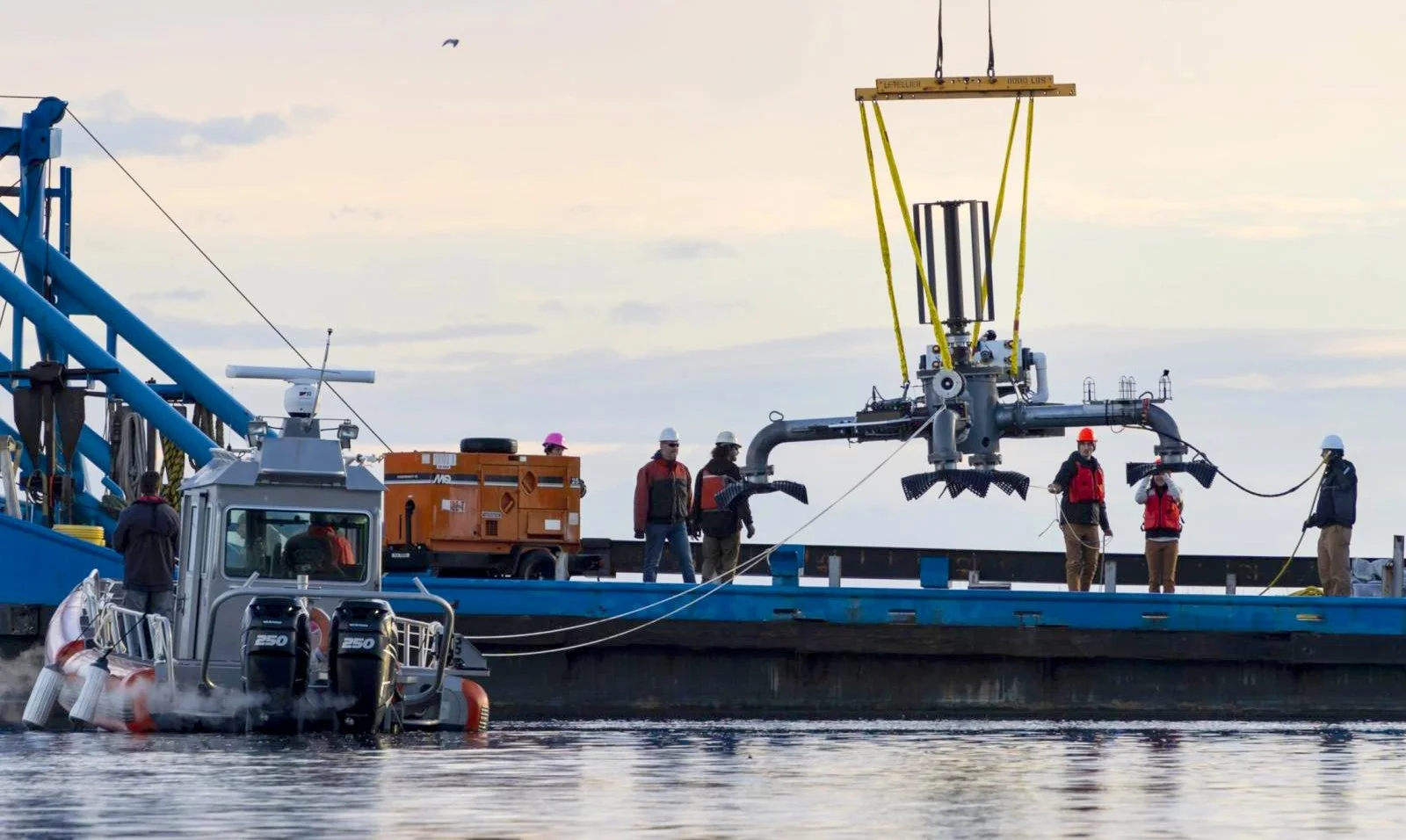
Pacific Northwest National Laboratory (PNNL) and the University of Washington's Applied Physics Lab (UW-APL) needed continuous, reliable ecological monitoring around a tidal turbine deployment, without the maintenance overhead that had defeated previous attempts.
MarineSitu deployed the Adaptable Monitoring Package (AMP) with custom detection models, anti-fouling systems, and integrated sonar, achieving 96% system uptime across a 141-day deployment in one of the most demanding marine environments on the planet.
"Our experience is that outputs from MarineSitu models generally took considerably less time to review, with some days requiring as little as an hour or two."
Chris Bassett, Research Scientist/Engineer Principal, UW-APLReady to deploy?
MarineSitu has over $10M in DOE-funded R&D behind marine energy monitoring specifically. We work directly with energy developers, national labs, and regulatory agencies from initial system design through data delivery.
Book a demo →